
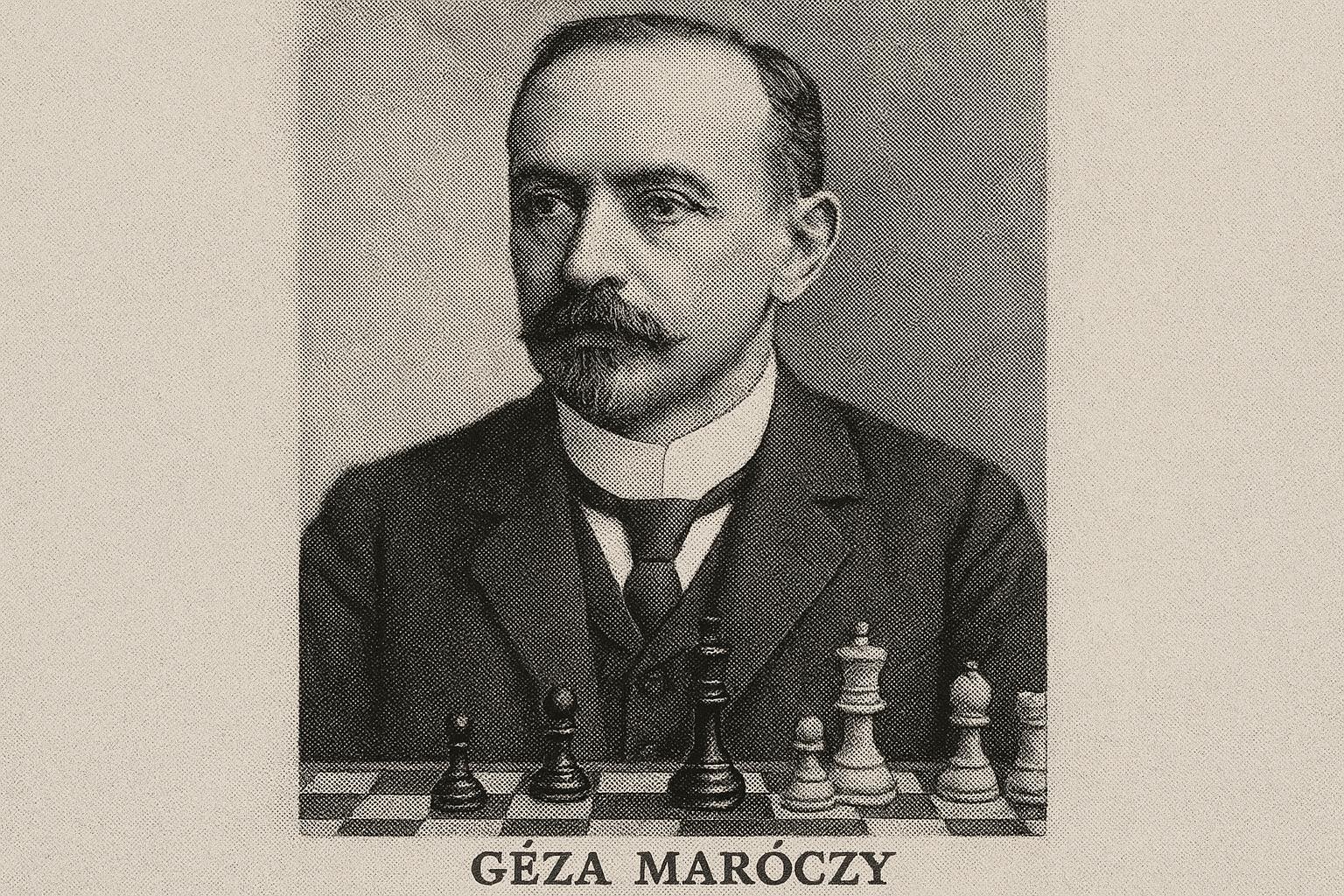
Early Life and Career
Géza Maróczy, born on March 3, 1870, in Szeged, Hungary, emerged as one of the prominent figures in the chess world during the early 20th century. His journey began not in a chess hall but in the field of accountancy; he initially worked as an auditor. However, his exceptional talent in chess soon overshadowed his profession, turning a passionate pastime into a celebrated career. The 1890s marked the beginning of Maróczy’s ascent in the chess landscape as he started participating in, and subsequently winning, various local, national, and international competitions. This rapid rise in status not only highlighted his capabilities but also set the stage for Hungary to recognize him as one of its greatest chess masters.
Achievements and Contributions
Géza Maróczy’s chess career was characterized by his strategic prowess and a strong reputation for defensive play, distinguishing him from many of his contemporaries. Over the years, he took part in numerous prestigious tournaments, consistently showcasing high-level performances. Among his many tournament achievements, the 1902 Monte Carlo tournament stands out prominently. In this notable competition, Maróczy successfully claimed first place amidst a field of the top players of that era, an achievement that significantly heightened his standing in the international chess community.
Beyond his tournament successes, Maróczy contributed significantly to chess as a theoretician. His advocacy and development of various opening strategies are well-documented, but perhaps his most famous contribution to chess theory is the popularization of the Maróczy Bind. This particular pawn structure is strategically used to control the center of the board, offering a distinct and sophisticated approach to the game. Maróczy’s writings and analyses have left a lasting impact on the world of chess, influencing countless players who have since adopted and adapted his strategic insights.
Rivalry with Leading Players
The competitive chess scene during Maróczy’s career was teeming with formidable players, and his encounters with such chess legends added another dimension to his storied career. Noteworthy among these were his matches against two of the greatest chess players of all time: Emanuel Lasker and José Raúl Capablanca. These encounters were not mere games but fierce competitions that demonstrated the depth of strategic thinking from all parties involved. The matches against these greats are still studied today for their intricate strategies and deep insights into high-level chess play, illustrating the intense rivalries that helped in shaping the chess landscape of that era.
Later Years and Legacy
As Maróczy’s illustrious playing career began winding down in the mid-1920s, he gracefully transitioned into a more supplementary role within the chess world. Though he stepped back from active competition, he did not depart from the chess scene entirely. Instead, Maróczy dedicated himself to coaching and mentoring the next generation of players. Through this role, he was able to impart his accumulated knowledge and insights from decades of top-level competition. His mentorship proved invaluable, nurturing new talents and assisting in the development of chess within Hungary and beyond.
In recognition of his monumental contributions to the world of chess, Maróczy’s legacy has been firmly cemented in the history of the game. Today, many chess clubs, tournaments, and study groups proudly bear his name, honoring the profound impact he made during his lifetime. His innovations in chess strategy and memorable tournament performances continue to be subjects of study and admiration among chess enthusiasts and scholars alike.
Conclusion
Géza Maróczy’s impact on the chess world is undeniable and multifaceted. As a player, he was renowned for his incredible tournament achievements and adept strategic play. As a coach and mentor, he played an essential role in shaping the minds of future chess talents. As a theoretician, his insights have profoundly enriched the understanding of chess strategy. His legacy lives on, inspiring future generations to pursue excellence in the game of chess. Through his life’s work, Maróczy not only advanced the strategic understanding of chess but also fostered an enduring passion for the game that continues to inspire players worldwide.
While the specific moves and matches that defined Maróczy’s career may only be fully appreciated by those with a deep understanding of chess, his broader contributions transcend the pieces and the board. He demonstrated the importance of strategic innovation and mentorship in equal measure, setting standards not just for playing chess, but for contributing to the broader chess community. As future generations of players continue to explore and expand upon his teachings, the name Géza Maróczy remains a cornerstone in the rich and diverse history of chess.