
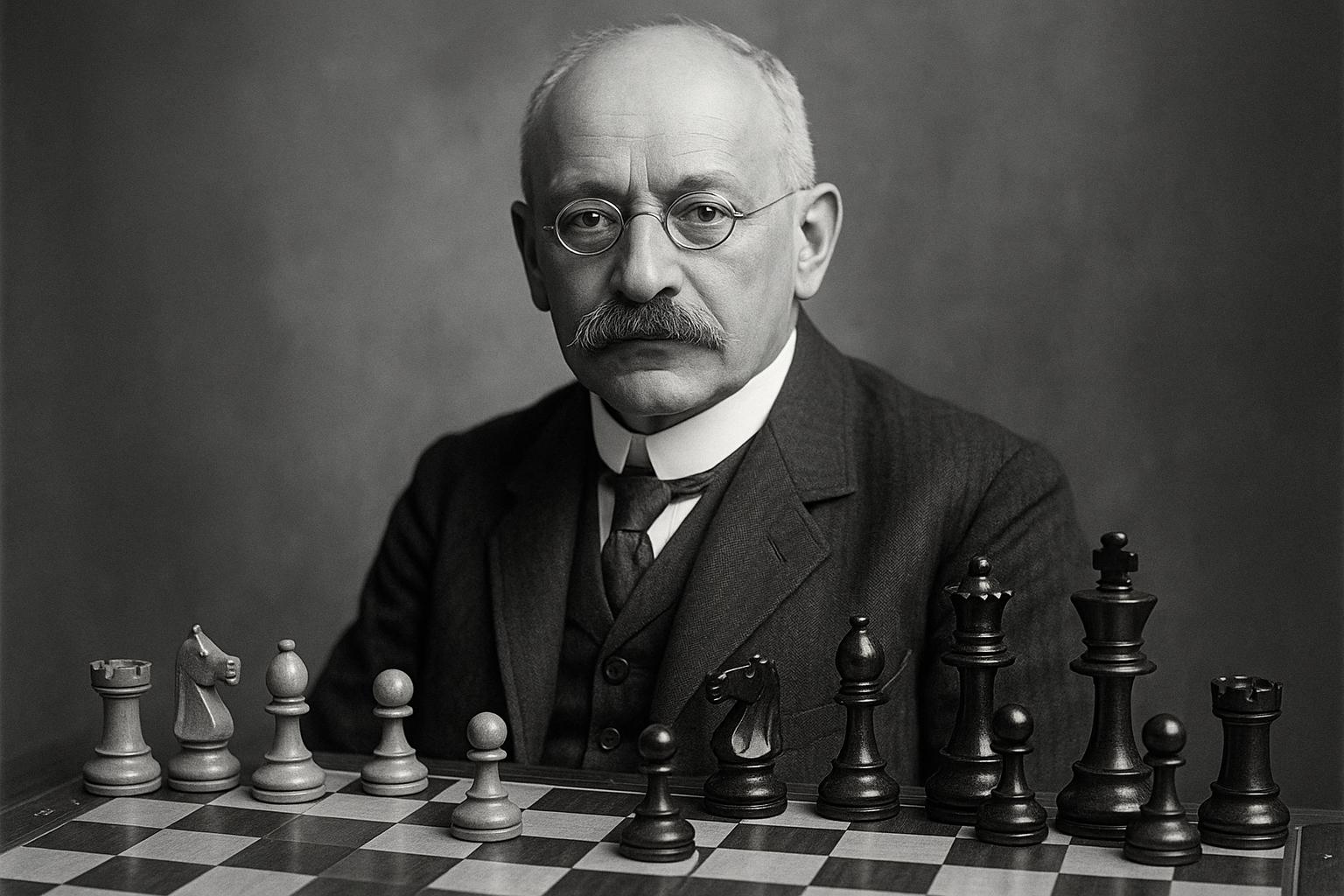
Siegbert Tarrasch: A Prominent Figure in Chess History
Siegbert Tarrasch, born in Breslau, Germany (now Wrocław, Poland), on March 5, 1862, stands out in the annals of chess history as a distinguished player and profound theorist. Even though he never clinched the world champion title, he is often remembered as one of the greatest players to have never achieved that pinnacle. His contributions to competitive chess and chess theory have left a lasting footprint, influencing players and enthusiasts to this day.
Early Life and Chess Career
Tarrasch exhibited a passion for chess from an early age, a game that captivated him and became a lifelong pursuit. His rapid progression in skill quickly earned him recognition within the chess community. By the late 19th century, Tarrasch had established himself as one of the leading players on the global stage. In 1889, his victory in the Congress of the German Chess Federation, held in Breslau, cemented his reputation as a formidable force in chess competitions.
Tarrasch’s early career mirrored his dedication to mastering the intricacies of chess, and this dedication was evident in his strategic plays and tactical excellence. His ascent in the chess world wasn’t merely a testament to his skill but also highlighted his relentless pursuit of perfection and understanding of the game.
Contributions to Chess Theory
Tarrasch’s prowess was not confined to playing; he was deeply committed to the theoretical aspects of chess. His influence in refining and propagating several key opening strategies is well noted. Among these, the Tarrasch Defense in the Queen’s Gambit and the Tarrasch Variation in the French Defense stand out as seminal contributions. These openings have withstood the test of time, remaining popular and fundamental in contemporary chess play.
Beyond specific openings, Tarrasch was an advocate for the classical principles of chess. His teachings implored players to focus on central control, cohesive piece development, and structured strategic planning. These classical principles became the cornerstone of his chess philosophy and have served countless players, from novices to elite grandmasters, as a guide to approaching the game.
Tarrasch’s theories on chess thought and strategy underscore the importance of understanding positional nuances and the interplay of pieces, thus paving the way for a more strategic and comprehensive approach to chess.
Literary Contributions
Tarrasch’s influence transcended his playing and theorizing role; he was also a prolific writer whose works have educated and inspired generations of chess enthusiasts. His books, such as Dreihundert Schachpartien (Three Hundred Chess Games) and Das Schachspiel (The Game of Chess), are celebrated for their clear exposition of complex concepts and strategic insights. In his writings, Tarrasch not only provided detailed analyses of numerous games but also delved into the principles that shaped his understanding of chess.
Dreihundert Schachpartien serves as a comprehensive guide to understanding the intricacies of different games, offering readers an opportunity to learn from Tarrasch’s vast experience. Meanwhile, Das Schachspiel encapsulates his theoretical foundations and offers structured insights into the game’s strategies and tactics.
These literary contributions have become quintessential resources for chess learning and continue to resonate with readers seeking to enhance their game understanding and strategic acumen.
Competitive Highlights
Throughout his illustrious career, Tarrasch accrued a series of notable accomplishments in international tournaments and matches. Among his achievements were his triumphs at Hastings in 1895, Monte Carlo in 1903, and Ostend in 1907. These victories underscored Tarrasch’s proficiency and strategic brilliance on the chessboard. Even though he was never able to seize the world championship title, during his peak years, he was unanimously recognized as a strong contender and a player of the highest caliber.
Tarrasch’s competitive highlights illustrate a career punctuated with success and demonstrate his unique ability to integrate strategic wisdom with the psychological demands of high-level chess competition.
Legacy and Influence
Siegbert Tarrasch passed away on February 17, 1934, in Munich, Germany. Nevertheless, his legacy lives on, deeply entrenched in the chess world. Both his theoretical contributions and competitive accomplishments have contributed immensely to the development of modern chess. His steadfast commitment to classical principles and logical reasoning has left an indelible mark on how the game is taught and played globally.
To explore Tarrasch’s lasting impact further, one might consider examining historical chess archives or engaging with academic publications dedicated to the game’s history and strategy. As both an accomplished competitor and a brilliant thinker, Siegbert Tarrasch remains an integral figure in the intricate and rich tapestry of chess history. For more detailed insights into Tarrasch’s work and its influence on modern chess, readers can refer to numerous resources dedicated to this subject.