
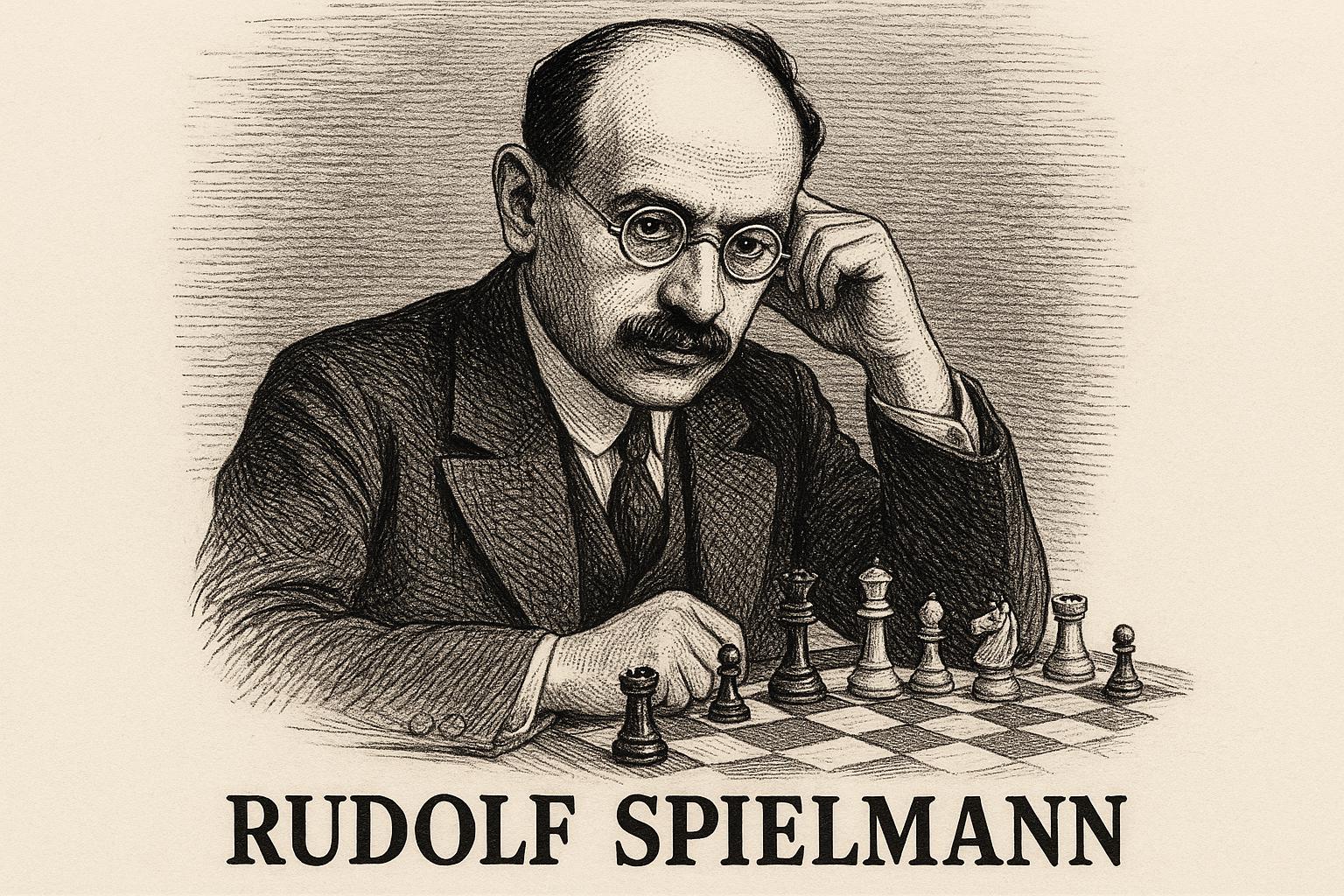
Rudolf Spielmann: A Master of Romantic Chess
Rudolf Spielmann, born on May 5, 1883, in Vienna, Austria, is a name that resonates within the chess community due to his exceptional dedication to the romantic era’s style of play. Known for his bold sacrifices and aggressive tactics, Spielmann became one of the most influential figures in early 20th-century chess. His innovative contributions have left a lasting impact on the game, inspiring chess enthusiasts across the globe.
Early Life and Introduction to Chess
Spielmann’s passion for chess ignited at a young age. Growing up in Vienna, a city that brimmed with cultural and intellectual activity, he was exposed to chess’s vast possibilities, both as a science and an art form. He internalized and was particularly captivated by the game’s depth of complexity and the aesthetic elegance it offered.
Despite the challenges of the era, Spielmann’s rapid rise in the chess community was evident. He consistently showcased an aggressive style that prioritized dynamic play over materialistic concerns. This approach distinguished him as a modern continuation of the romantic-era players, who valued artistic and tactical flourishes over everything else.
Style of Play
The essence of Rudolf Spielmann’s chess style was in his love for sharp tactical encounters. His games often turned into a battlefield of tactics, with bold sacrifices leading to breathtaking and historic outcomes. Realizing that open positions provided better opportunities for tactical play, Spielmann favored such positions and did not shy away from giving up material to gain initiative or control over the board.
Yet, despite an aggression that might seem at odds with deeper strategic considerations, Spielmann demonstrated an astute understanding of chess strategies. This knowledge enabled him to effectively tackle complex positions, seamlessly transitioning between wild tactical skirmishes and the strategic maneuvering those situations demanded.
Notable Games and Achievements
Throughout his illustrious career, Spielmann played numerous games that became cornerstones of chess literature. One such remarkable victory was against Akiba Rubinstein in 1923. This game, celebrated as a perfect blend of tactical genius and pioneering attacking play, is often referred to as an exemplar of Spielmann’s undaunted approach to the game.
Spielmann’s prowess was not limited to a handful of breathtaking games; his consistency in various high-stake tournaments further solidified his status in the upper echelons of chess greatness. He clinched the championship title in several prestigious tournaments, once again proving his remarkable talent and resilience against some of the strongest contemporaries of his time.
Contributions to Chess Literature
Beyond his on-board exploits, Rudolf Spielmann significantly contributed to chess literature, providing deeper insights into his thought process and understanding of the game. His 1935 publication, “The Art of Sacrifice in Chess,” remains a cornerstone for players aiming to grasp the intricate nature of tactical sacrifices. This book not only elucidates Spielmann’s approach but also serves as an enduring testament to his profound influence on the game. It opens a window to his strategic mind, offering readers a glimpse of how art and logic coalesce in chess.
Legacy and Influence
Rudolf Spielmann’s legacy in the chess world is a testament to his unwavering commitment and love for the romantic era of chess. His fearless approach continues to inspire players who enjoy aggressive and tactical play. The romantic style he championed is remembered for its beauty and creativity, offering a timeless reminder of chess’s artistic potential.
This spirit of creativity and elegance continues to resonate, even though modern chess often leans towards more strategic and positional styles. Spielmann’s influence persists, particularly in the attacking endeavors of players who embrace dynamic and non-traditional strategies. He remains an emblem of chess’s artistic possibilities, admired for balancing creative ingenuity with the competitive essence that defines the game.
In reflecting upon Spielmann’s life and career, his playing philosophy serves as a bridge between chess styles of the past and present. His style may appear unconventional by today’s standards, which tend to emphasize cautious, strategic buildup over immediate tactical confrontation. Nonetheless, elements of Spielmann’s play – particularly his boldness and willingness to dive into complexity – continue to inspire those who look to disrupt the status quo on the board.
Spielmann’s enduring popularity and influence can be attributed not only to his skill but also to his ability to capture the imagination of players and enthusiasts who see chess more as an art form than just a competitive venture. In this light, his contribution transcends mere victories and accolades; he offered the chess world a way to appreciate the game in its most splendid, romantic essence.
By celebrating his achievements and recognizing his contributions, we remind ourselves of the diverse approaches that have shaped the game’s history. For many, Spielmann’s games are not just matches; they are masterpieces where every move counts in a narrative of sacrifice, creativity, and the relentless pursuit of beauty and victory. His life’s work persists not only in the records of chess history but also in the hearts of those who continue to play, analyze, and cherish the game he loved so deeply.