
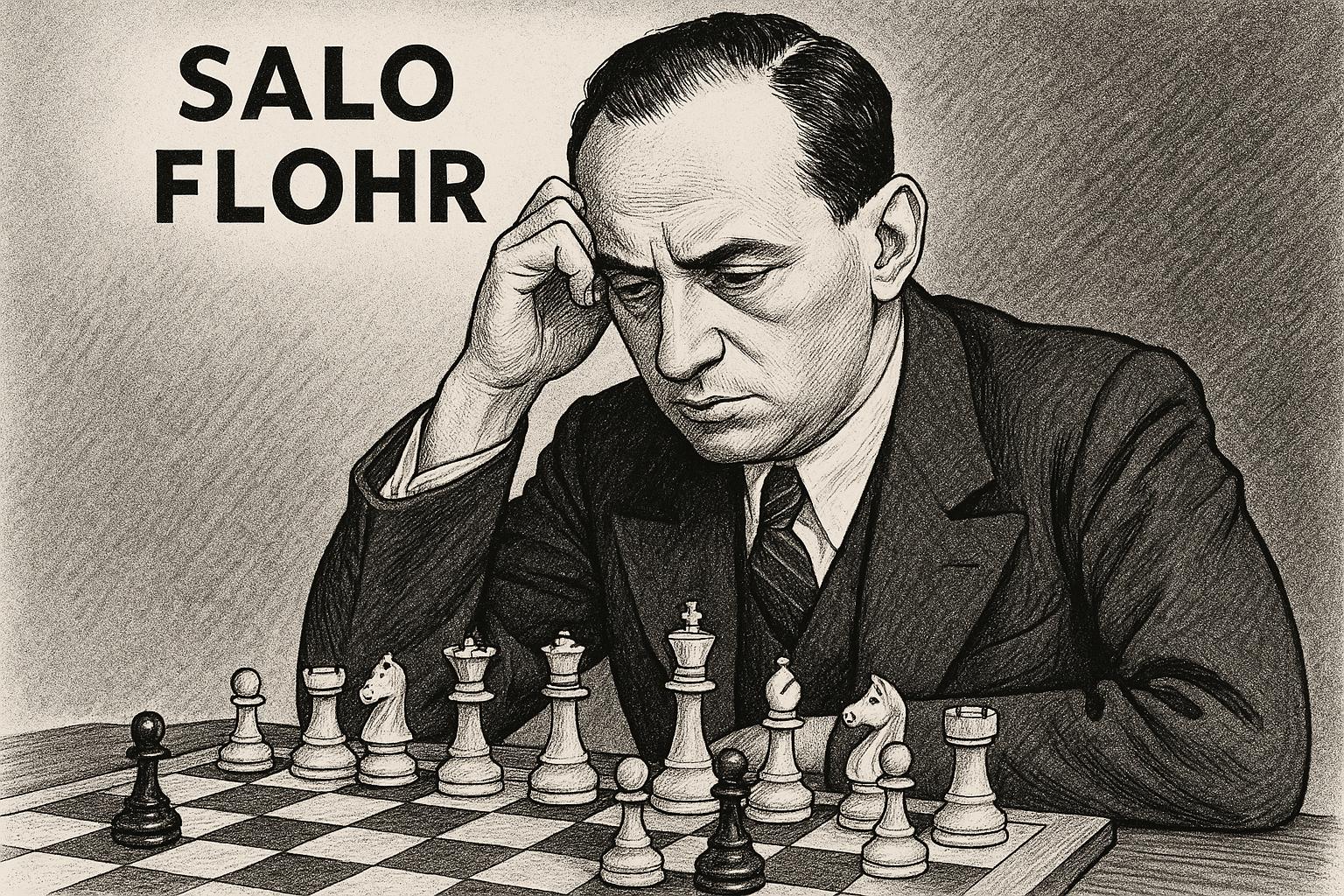
Early Life and Background
Salo Flohr was born on November 21, 1908, in the town of Horodenka, which was part of the Austro-Hungarian Empire. This region, rich in culture and history, later became part of the newly formed country of Czechoslovakia following the conclusion of World War I. Flohr’s formative years were intricately shaped by the socio-political upheavals of early 20th-century Europe, a time marked by massive shifts in national borders, identities, and governance.
Growing up in such a turbulent era would naturally have impacted young Salo’s worldview. The changes in his homeland weren’t merely lines redrawn on a map but were truly world-altering events that influenced the fabric of daily life and society. The repercussions of the World War brought about shifts in ideologies and introduced new perspectives and challenges to individuals like Flohr. During these impressionable years, Flohr found himself gravitating toward the complex game of chess. What started as a simple interest quickly evolved into a deep-seated passion, setting the stage for what would become a celebrated chess career.
Rise to Prominence in Chess
The 1920s proved to be a decisive decade for Salo Flohr as he began to establish himself firmly in the world of chess. It was in this period that his chess career began to gain significant traction. The turning point came in 1930 when Flohr emerged victorious at the international tournament in Rovigo, Italy. This victory wasn’t just a personal milestone but marked the commencement of a series of substantial successes in various chess tournaments throughout the decade.
Flohr’s style of play quickly earned him a reputation among the elite circles of chess enthusiasts and professionals. He was recognized not merely for technical skill but for a strategic acumen that made him a formidable competitor in the international chess circuit. By the early 1930s, his presence was felt strongly in tournaments across Europe and beyond. Flohr’s game was often characterized by a solid and positional approach, showing a preference for calculated play rather than risky maneuvers. His keen ability to evaluate positions and navigate the complexities of middle and endgame scenarios enabled him to hold his ground against the best players of his time.
World Championship Aspirations
The mid-1930s were marked by Salo Flohr’s aspirations toward the pinnacle of chess success—the World Chess Championship. This ambition demonstrated his caliber as a chess player recognized internationally as a serious contender for the title. In 1937, he was positioned to challenge the reigning champion, Alexander Alekhine, for the coveted title.
However, these aspirations were thwarted by the period’s threatening geopolitical climate. The rise of tensions in Europe led to the match’s postponement, and it was eventually canceled. This setback did not diminish Flohr’s standing within the chess community. Even without a shot at the world title, he continued to be viewed as a central figure in chess, respected for both his past achievements and ongoing contributions to the sport.
Impact of World War II
The onset of World War II significantly impacted not just global relations and economies but also Salo Flohr’s chess career. As the world plunged into conflict, international chess tournaments were disrupted or halted entirely. The challenges Flohr faced during this period were both personal and professional.
Despite the global turmoil, Flohr persevered and continued competing at a high level whenever possible. After the war, the landscape had changed dramatically; the opportunities that once existed were no longer the same. Many chess players, like Flohr, had to adapt to a new order and the geopolitical divisions that arose during the Cold War era.
Life in the Soviet Union
After World War II, Salo Flohr took a significant step by immigrating to the Soviet Union. This move marked a new chapter in his illustrious career. Within the Soviet Union, Flohr didn’t merely continue his competitive pursuits; he became a part of the Soviet chess federation, contributing to the rich tapestry of Soviet chess excellence.
In the Soviet Union, Flohr’s role transcended that of a competitor. He became a mentor, influencing and inspiring emerging talents. His experience and knowledge benefited many young players who would go on to have successful chess careers. This period emphasized the cultural exchange and intellectual nurturing paramount within the Soviet chess school. Flohr’s presence was a bridge connecting pre-war and post-war chess traditions, ensuring the game’s vitality and continuity.
Legacy and Contributions
Salo Flohr’s legacy in chess extends far beyond his tournament victories and competitive prowess. His contributions to the game are multifaceted, reflecting his deep passion and commitment to the art of chess. Apart from being a player, he actively promoted the game through various channels.
Flohr’s work as a chess journalist and commentator allowed him to share his insights and knowledge with a broader audience. His analyses were highly regarded, enriching the understanding of both players and enthusiasts. Through his writings, he helped popularize chess, presenting it not just as a game but as a blend of art and science.
Moreover, Salo Flohr’s career stands as a testament to resilience amid geopolitical upheaval. His ability to navigate and succeed despite the turbulence of his times highlights the transcendental nature of chess—a sport that can rise above its historical context and speak to the timeless nature of human intellect and strategic thought. Flohr passed away in Moscow on July 18, 1983, but his influence endures in the annals of chess history.
In summary, Salo Flohr’s life journey from a small town in the Austro-Hungarian Empire to the epicenter of Soviet chess illustrates a blend of personal perseverance and professional excellence. His story serves as an inspiration, showcasing how the love for a game can lead one through life’s unpredictabilities and leave a lasting imprint on the world.