
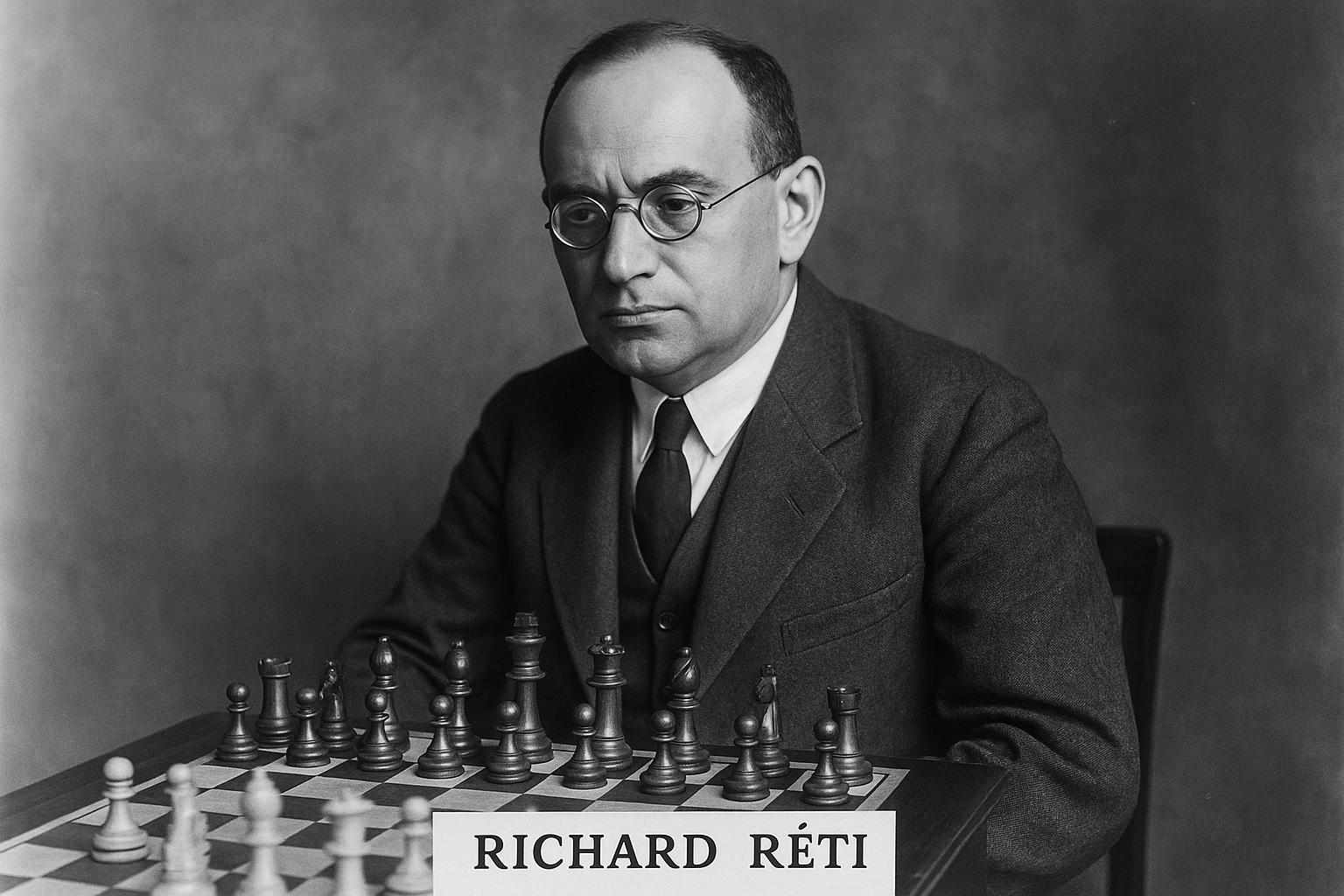
Introduction to Richard Réti
Richard Réti was a prominent figure in the world of chess, celebrated not only for his skills as a player but also for his transformative contributions to chess theory. Born on May 28, 1889, in Pezinok, now a part of Slovakia, Réti emerged as a pivotal force in the development of the hypermodern movement. This movement, which revolutionized the way chess was played and understood, placed Réti among the pantheon of chess thinkers who reshaped the strategic landscape of the game.
Early Life and Chess Career
Réti’s passion for chess was evident from a young age. Unlike many of his contemporaries, Réti’s approach was unconventional, as he sought to challenge the traditional methods of play that were widely accepted during his formative years. By the time he reached early adulthood, his prowess on the chessboard was unmistakable. The early 20th century saw him rise to prominence on the international chess scene, where he not only competed but frequently excelled in tournaments against the strongest players of his era. His unique style was defined by a deviation from classical principles, favoring a control of the center that was achieved by maneuvering pieces rather than occupying it with pawns.
Contributions to Chess Theory
Richard Réti’s influence on chess theory is perhaps best encapsulated by the opening that bears his name, the Réti Opening. This innovative strategy commences with 1. Nf3, a move that exemplifies the hypermodern approach. Instead of rush to occupy the center with pawns, the Réti Opening strategically develops pieces first, setting up a flexible pawn structure for later advantages. This opening has been praised for its adaptability and strategic depth, allowing players to exploit their opponent’s weaknesses and positional errors.
In addition to the Réti Opening, his theoretical contributions were profound and far-reaching. His analytical prowess is evident in his 1923 publication, “Modern Ideas in Chess.” This book offered readers a deep dive into the emerging strategic principles of the time, challenging the status quo and encouraging players to embrace more dynamic and fluid styles of play. Through his writings, Réti articulated complex concepts with clarity, making advanced strategies accessible to both aspiring players and seasoned practitioners. His insights served as a catalyst for the ongoing evolution of strategic thought within the chess community.
Remarkable Achievements
Despite being remembered predominantly for his theoretical innovations, Richard Réti was also a formidable competitor. His reputation as a player was cemented through numerous impressive performances, most notably his victory over World Champion José Raúl Capablanca in 1924. This was a standout moment in chess history, as it marked the end of an eight-year unbeaten streak for Capablanca. Such victories highlighted Réti’s exceptional talent and his ability to put his theories into practice with devastating effect on the chessboard.
Réti’s capacity to dissect his opponents’ strategies and execute counter-narratives in real-time was a testament to his deep understanding of the game. While his win against Capablanca is perhaps his most celebrated game, Réti participated in and triumphed at many other respected tournaments, consistently demonstrating his elite status in the chess world.
Legacy and Influence
The legacy of Richard Réti extends well beyond his lifetime, permeating through the ongoing development of chess as both a competitive sport and a subject of intellectual study. His pioneering spirit helped to dismantle the rigid confines of classical chess, ushering in a new era characterized by innovation and creativity. By advocating for a more flexible and dynamic approach to play, Réti laid the groundwork for future generations of chess players to think beyond established boundaries.
Réti’s impact is felt not only in professional circles but also among chess enthusiasts and hobbyists. His games and analyses are frequently studied, serving as instructive examples of how unorthodox strategies can be leveraged to overcome seemingly invincible opponents. For those interested in delving deeper into Richard Réti’s life and contributions, numerous resources are available, offering comprehensive analyses and biographical insights that illuminate this influential figure’s enduring significance.
Richard Réti’s contributions have left an indelible mark on the world of chess, challenging and inspiring future generations to explore new possibilities and think creatively about the game. Those interested in learning more can find further details and discussions about Réti’s life and work here.
As an architect of hypermodernism, Réti’s legacy persists, continually influencing and inspiring chess players to look beyond traditional paradigms, to innovate, and to appreciate the beauty and complexity that chess has to offer.