
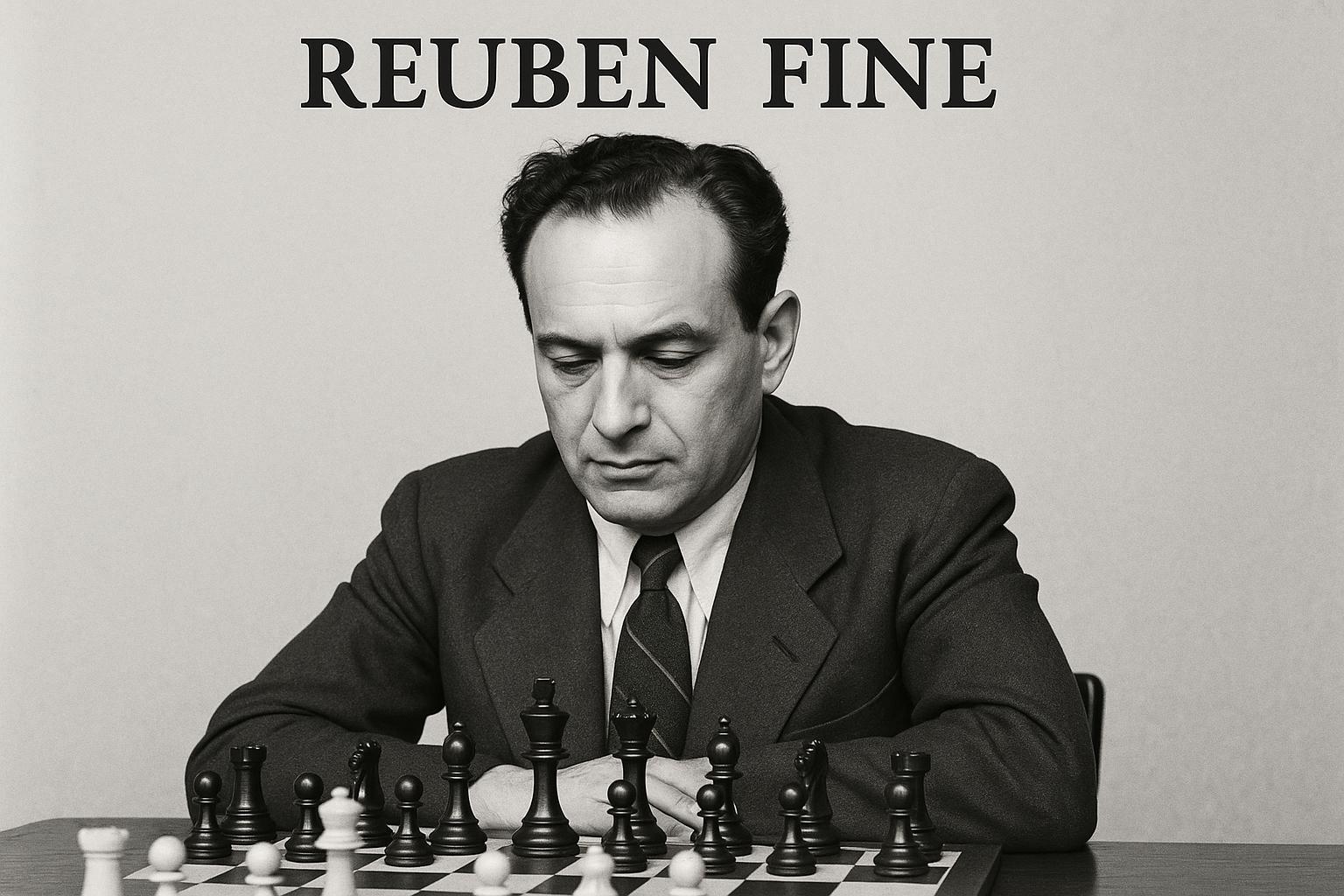
Introduction to Reuben Fine
Reuben Fine was an exceptional individual celebrated for his contributions to two seemingly distinct fields: chess and psychology. Born on October 11, 1914, in the bustling city of New York, Fine exhibited an exceptional talent for both strategic gameplay in chess and the complexities of human psychology. His robust intellectual pursuits and successes in these domains have rendered him a unique figure of the 20th century, whose contributions continue to be revered and studied.
Chess Career
Fine’s journey in the world of chess is marked by a rise that can only be described as meteoric. From a young age, he was engaged with the game, and it wasn’t long before his talents saw him participating in grandmaster-level tournaments during the 1930s. Known for his strategic acumen and precise analytical skills, Fine quickly gained a reputation as one of the leading chess players of his era. His influence extended beyond national boundaries as he frequently participated in international tournaments and represented his country in chess Olympiads.
A landmark in Fine’s chess career was his participation in the 1938 AVRO tournament held in the Netherlands. Although victory eluded him, his performance against a roster of the world’s foremost chess players reaffirmed his status as a chess luminary. Furthermore, his seven-time victory in the US Open Chess Championship stands testament to his supremacy and skill in national competitions.
World War II and Its Impact
The advent of World War II brought significant disruptions to many professional domains, and Fine’s chess career was no exception. Despite the global chaos, Fine’s passion for chess did not wane. He remained deeply engaged with the chess community, primarily through his writing and game analyses. His work during this tumultuous period wasn’t just a personal pursuit but rather a substantial contribution to the development and evolution of chess strategies. Fine’s insights and analyses became valuable assets to chess literature, influencing the strategic approaches of players across the globe.
Post-War Chess Involvement
In the aftermath of World War II, Reuben Fine faced a pivotal choice in his career trajectory. He was extended an invitation to participate in the 1948 World Chess Championship, an opportunity that would have been the pinnacle for many. However, Fine made the surprising decision to decline this opportunity, prioritizing instead his burgeoning interest and career in psychology. This shift marked a significant turn in his professional life, redirecting his focus and intellectual efforts towards understanding the human mind.
Psychology Career
Parallel to his achievements in chess, Fine embarked on an academic journey in psychology that was as noteworthy as his chess endeavors. He pursued and obtained a doctoral degree in psychology, establishing himself as a skilled and insightful psychoanalyst. Fine applied the same analytical prowess he demonstrated on the chessboard to his psychological studies, contributing extensively to psychoanalytic literature.
Reuben Fine became known for his incisive analyses and his ability to unravel complex human behaviors. His work in psychology was not restricted to academia; it extended into practical applications in psychotherapy, where his insights into the therapeutic process were highly regarded. Fine’s commitment to the study of human emotions, behavior, and the underlying psychodynamics enriched the field significantly.
Books and Publications
Fine was not only a practitioner but also a prolific author. He penned numerous books and publications that have left an indelible mark in both chess and psychology literature. In chess, his writings on openings and strategic insights remain a valuable resource for both enthusiasts and professional players. Likewise, his psychological texts provided keen insights into human behavior, deepening the understanding of psychotherapy and its methodologies.
His dual authorship allowed him to draw parallels between the cognitive processes involved in chess and psychological analysis, bridging the disciplines in ways that were innovative at the time. Fine’s works are appreciated for their clarity, depth, and the ability to translate complex concepts into comprehensible ideas for a broad audience.
Conclusion
The legacy of Reuben Fine is one characterized by diverse excellence and profound contributions to both chess and psychology. His relentless pursuit of understanding, whether through the lens of a chessboard or the complexities of the human psyche, has left a lasting impression on both fields. Fine’s work in chess theories, spanning his active playing years to his comprehensive writings, continues to influence and educate players within the sport. Simultaneously, his psychological insights have become part of the foundational literature guiding psychotherapeutic practices. Fine is celebrated as an intellectual whose work transcended traditional disciplinary boundaries, leaving a rich legacy of knowledge and inspiration that continues to resonate today.