
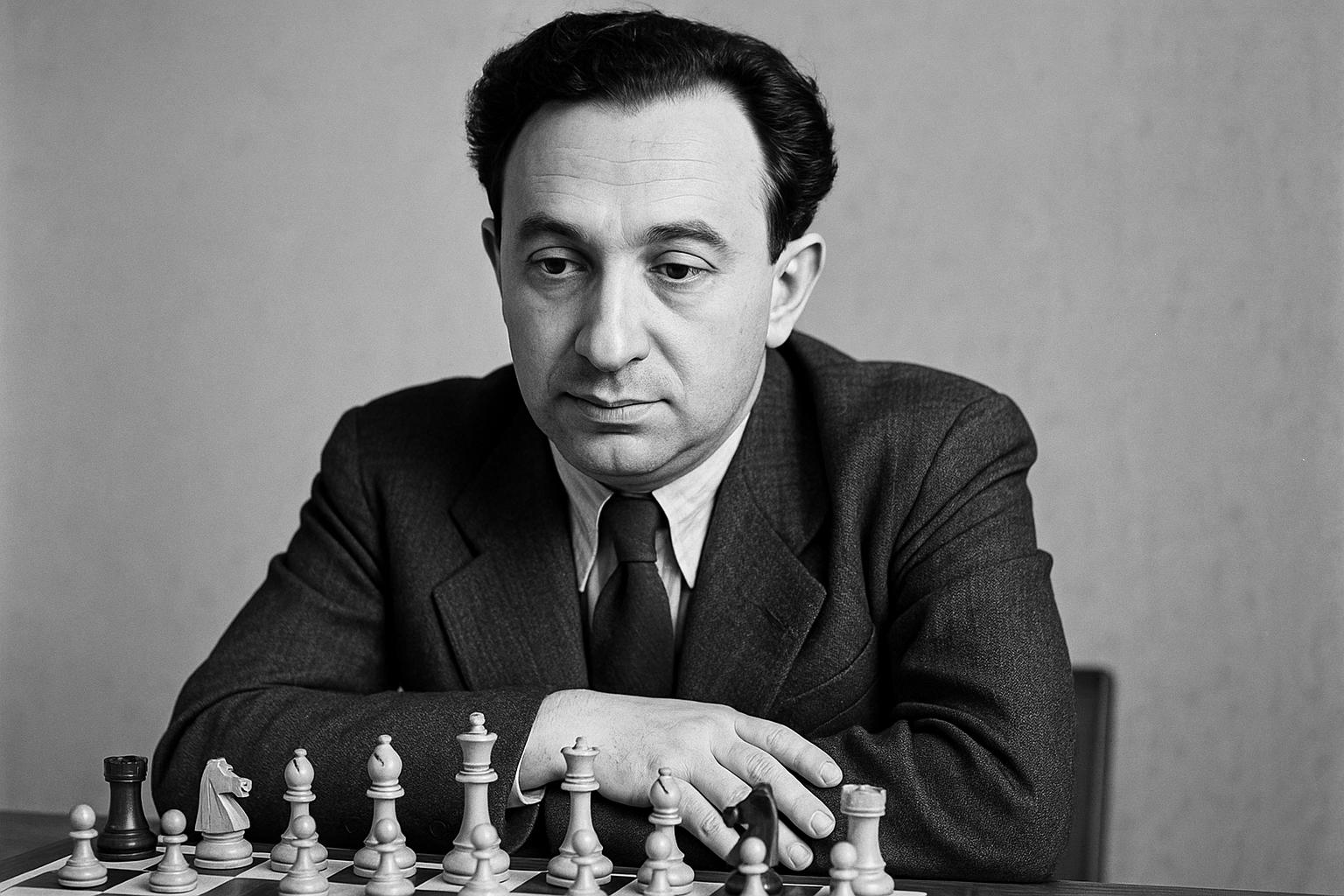
Isaac Boleslavsky: A Pioneering Chess Grandmaster
Isaac Boleslavsky, known as a prominent figure in the realm of chess, significantly shaped chess theory and practice during his lifetime. Boleslavsky, with his profound understanding of the game’s intricacies, contributed vastly to the development of chess openings and strategic play. Born on June 9, 1919, in Zolotonosha, Ukraine, his legacy continues to influence modern chess strategies.
Early Life and Chess Career
From a young age, Isaac Boleslavsky exhibited exceptional skill at chess, quickly becoming a distinguished player within Soviet circles. His early chess career was marked by participation in various competitions, both nationally and internationally. These experiences allowed him to measure his skills against prominent players of his time, thus refining his approach to the game. His dedication and profound analytical skills laid a strong foundation for his future accomplishments as a chess player and theoretician.
Pre-World War II Achievements
Before the outbreak of World War II, Boleslavsky already showed promise as a burgeoning chess talent. He actively engaged in competitions, gaining valuable experience and recognition. The chess circuit before the war was bustling with opportunities, and Isaac made sure to capitalize on these by honing his skills through regular participation and learning from his opponents.
World War II and Post-war Era
The advent of World War II brought a temporary halt to Boleslavsky’s competitive chess endeavors. Despite the interruptions, he did not distance himself from the game. Instead, he invested time in studying chess more deeply, a practice that greatly benefited his post-war career. Once hostilities ceased, Boleslavsky returned to the chessboard with renewed focus and enthusiasm. The late 1940s and the early 1950s marked an era of significant achievement for him, highlighting his talent and strategic acumen in numerous competitions.
Contributions to Chess Theory
Isaac Boleslavsky’s lasting impact on chess is largely attributed to his work on chess openings, an area where his insights reached into the very core of strategic development. Perhaps most notably, he developed the Boleslavsky Variation of the Sicilian Defense. This specific variation is celebrated for its strategic depth and dynamic possibilities, remaining a favorite among top-tier players even today. Boleslavsky’s extensive analysis was meticulously crafted, and many of his ideas became integral to the repertoires of succeeding chess masters.
In addition to his work on the Sicilian Defense, Boleslavsky contributed significantly to the King’s Indian Defense. His novel approaches and strategic innovations cemented his status as an eminent chess theoretician, making substantial contributions that would guide future generations of players.
Innovations in the Sicilian Defense
Boleslavsky’s pioneering approach towards the Sicilian Defense involved a unique blend of aggressive and positional play, providing an intricate balance that allowed for flexibility and adaptability on the chessboard. His variations offered players the opportunity to engage in complex battles, where strategic planning and tactical awareness were pivotal to success.
Developments in the King’s Indian Defense
Boleslavsky’s work within the King’s Indian Defense showcased his ability to dissect opening strategies meticulously. His contributions laid out aggressive but balanced pathways that enabled players to counter and capitalize on opponents’ moves. This strategic framework enhances the player’s ability to transition between defensive and offensive plays seamlessly.
Notable Achievements
Among Boleslavsky’s many accolades:
– He became a dominant force in the Soviet chess scene, recognized for his strategic brilliance and theoretical insights.
– In 1950, he was awarded the title of Grandmaster by FIDE, a testament to his exceptional abilities and accomplishments in the game.
– Boleslavsky reached the finals of the Candidates Tournament in 1951—a closely contested competition that brought him to the brink of challenging for the World Chess Championship.
Legacy and Influence
Isaac Boleslavsky’s legacy resides in the profound impact he had on chess strategy and opening play. His analytical writings and innovative approaches have continuously served as invaluable resources for players aspiring to understand and master chess. Through books and articles, he disseminated his deep strategic insights, ensuring that subsequent generations could benefit from his expertise. The principles and theories he espoused have endured through time, informing contemporary chess playing and extending his influence far beyond his lifetime.
Final Years and Death
Even in his later years, Isaac Boleslavsky remained deeply involved in the chess community, channeling his experience and knowledge as a trainer and analyst. He strived to perpetuate the growth of chess and continued to inspire new players until his death on February 15, 1977. His contributions to chess theory, particularly in openings and strategic planning, remain of paramount importance. Today, Isaac Boleslavsky is celebrated as an integral figure in chess history, his work continuing to be a valuable reference for enthusiasts eager to delve into the complexities of chess theory and practice.
Boleslavsky’s enduring influence assures that his intellectual legacy will persist, inspiring chess players and theorists alike to push the boundaries of the game further. His dedication to the advancement of chess theory provides a blueprint for strategic thought, underscoring the timeless nature of his contributions to the sport.