
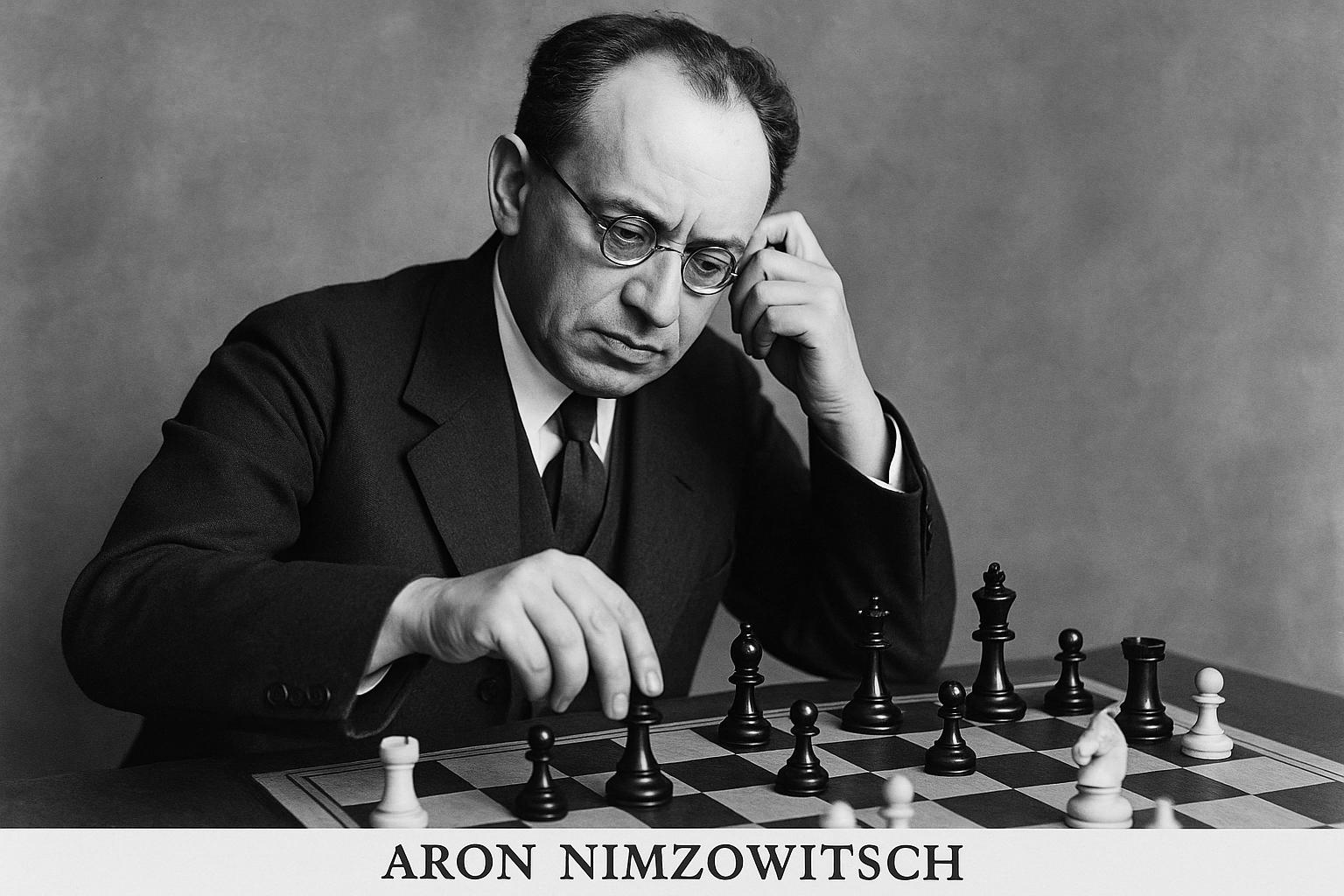
Introduction to Aron Nimzowitsch
Aron Nimzowitsch, a stalwart in the history of chess, carved a niche for himself through his distinctive approach to the game. His innovations and strategic acumen made him a significant figure in the early 20th century. Born on November 7, 1886, in the city of Riga, Latvia, Nimzowitsch was a pioneer of the hypermodern school of chess. This school of thought diverged from classical chess strategies by advocating the control of the center of the board with remote pieces rather than directly occupying it with pawns.
Early Life and Chess Beginnings
Aron Nimzowitsch’s early years in Riga were spent in a Jewish household where he was first introduced to chess at the tender age of eight. Recognized early on for his exceptional skills and strategic mindset, Nimzowitsch rapidly gained prominence as an adept player. His growth in the world of chess was swift, and by the time he entered his twenties, he was already a staple at major international tournaments. His participation in these contests was marked by his unique style and tactical ingenuity, which set him apart from his peers.
Development of the Hypermodern School
As the 1920s dawned, Nimzowitsch became one of the foremost proponents of the hypermodern school of chess, a movement that sought to revolutionize the established norms of the game. Hypermodernism in chess was defined by a strategy that emphasized a more indirect control over the game’s central squares. Unlike traditional strategies, which often focused on occupying the center with pawns, hypermodernism employed pieces placed at a distance to dominate the crucial areas of the board. This method allowed for increased flexibility and the potential for unexpected counterattacks. Through his writings, as well as his performances in various matches, Nimzowitsch profoundly influenced players of his time and the generations that followed.
Key Contributions and Strategies
Aron Nimzowitsch is credited with introducing several innovative strategic concepts that challenged the existing norms in chess. One of these concepts was prophylaxis—a strategy aimed at foreseeing and thwarting an opponent’s potential moves and plans before they could be executed. This forward-thinking approach added a layer of complexity to the game and required players to be more anticipatory in their thinking.
His seminal work, My System, published in 1925, is still regarded as a cornerstone of chess literature. The book delves into critical themes such as pawn structures, the art of overprotection, and the nuances of positional play. Each of these elements contributed to a deeper understanding of the game’s intricacies.
Furthermore, Nimzowitsch brought the concept of the blockade into the limelight. The blockade entails positioning a piece directly in front of an opponent’s pawn to arrest its progression and thereby diminish its capability to support other pieces. His pioneering tactics encouraged players to contemplate the strategic positioning of their pieces in terms of blocking opponent advances, which has had lasting impacts on modern chess strategy.
Legacy and Influence
The legacy of Aron Nimzowitsch transcends his personal triumphs in chess tournaments. His pioneering work and ideas about hypermodernism fundamentally altered the trajectory of chess strategy, integrating his theories into mainstream chess pedagogy. Nimzowitsch’s unconventional approach fostered a dynamic and inventive style of playing the game, solidifying his status as an instrumental figure in the development of chess.
Players and theorists alike continue to draw on Nimzowitsch’s insights to explore novel strategies and approaches. Nimzowitsch, through his intellectual contributions, laid the groundwork for a more vibrant and creative form of chess, making him a pivotal contributor to the game’s strategic evolution.
For those interested in delving deeper into Aron Nimzowitsch’s world and his profound impact on chess, numerous online resources and analysis can offer comprehensive examinations of his games. These platforms provide annotated matches and in-depth discussions, further illuminating the genius of Nimzowitsch and his contribution to the craft.