
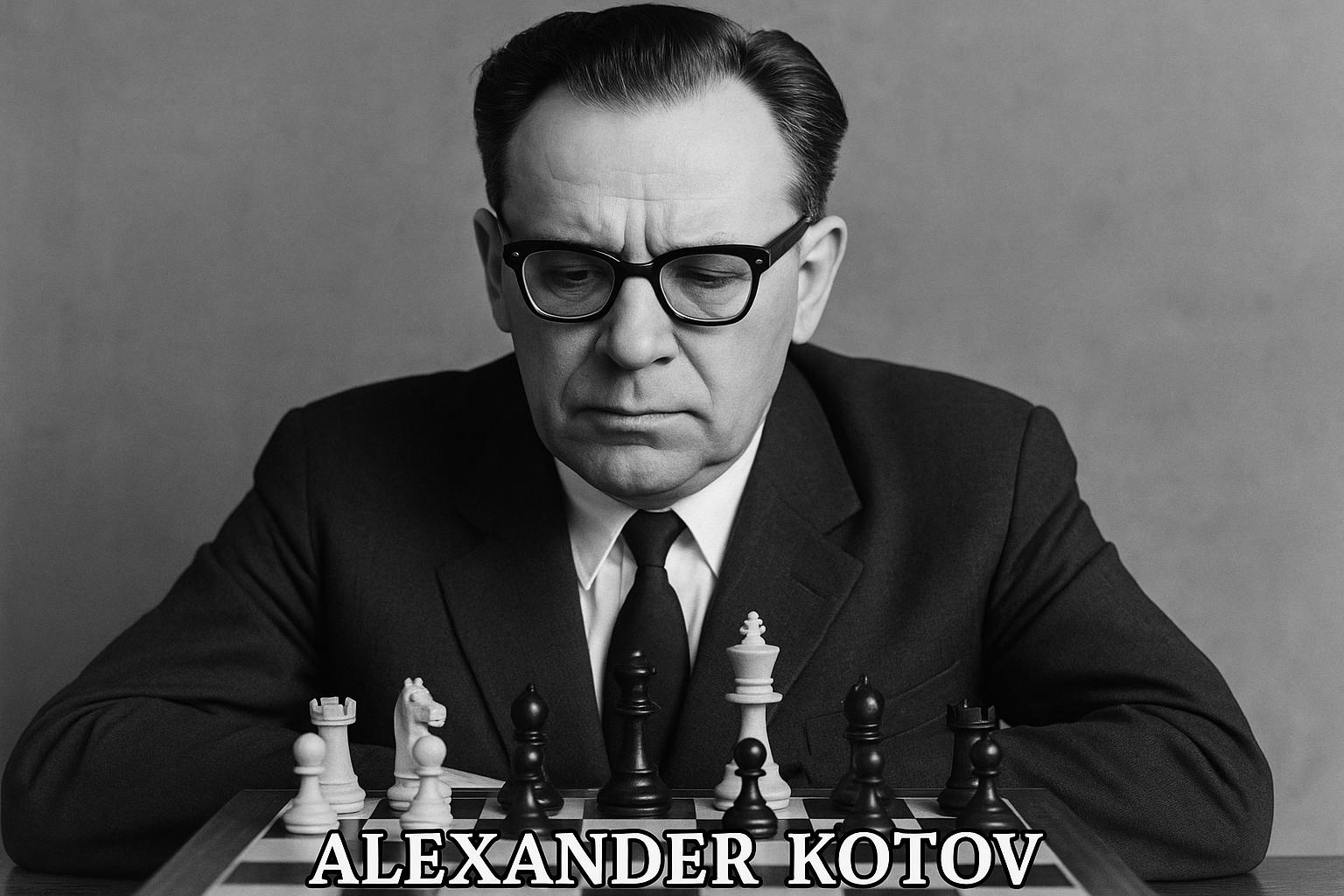
Introduction to Alexander Kotov
Alexander Kotov remains a luminary in the annals of chess history, renowned for his prowess on the board and his considerable contributions to chess literature. As a Soviet chess player, writer, and influential figure, his impact on the chess community during the mid-20th century was profound. Kotov’s contributions extended beyond his personal achievements; he played a crucial role in popularizing the game through his insightful writings, which continue to be a valuable resource for chess enthusiasts around the world.
Early Life and Career
Born on August 12, 1913, in Tula, Russia, Alexander Kotov’s journey with chess began at a young age. His innate ability to grasp the complexities of the game became apparent early on, leading him to quickly establish himself within the competitive Soviet chess scene. By 1939, he had achieved the status of a national master, a testament to his strategic insight and deep understanding of the game. His early experiences in chess laid the foundation for a career that would see him rise to prominence on the international stage.
Chess Achievements
Alexander Kotov’s career was marked by numerous notable achievements. Among the most significant was his triumph at the USSR Chess Championship in 1948. This victory not only solidified his place among the chess elite but also underscored the strategic depth and skill he brought to every game he played. As a representative of the Soviet Union in numerous Chess Olympiads, Kotov significantly contributed to the Soviet team’s dominance during this era. His participation in these prestigious tournaments highlighted his abilities as a player and his strategic acumen, which often led the Soviet team to victory.
Famous Matches
Kotov’s competitive career was punctuated by a series of unforgettable matches, many of which continue to be studied by chess enthusiasts and professionals alike. His encounters with contemporaries such as Paul Keres and Vasily Smyslov are particularly noteworthy. These matches demonstrated Kotov’s tactical brilliance and strategic creativity, often resulting in spectacular victories that are still analyzed for their depth and ingenuity. Kotov’s playstyle, characterized by a blend of aggressive tactics and solid positional play, made him a formidable opponent and a favorite subject of study for aspiring chess players.
Contributions to Chess Literature
Alexander Kotov’s influence on the chess world extends far beyond his success as a player. As an accomplished writer, he authored several influential books that have become classics in chess literature. His ability to articulate complex chess strategies and concepts in an accessible manner revolutionized how chess was taught and understood. His most celebrated work, Think Like a Grandmaster, published in 1971, offers a systematic approach to chess thinking techniques. The book is praised for its clarity and practical guidance, making it an essential read for players aiming to improve their strategic approach to the game.
Writing Style and Influence
Kotov’s writing is distinguished by its clarity and analytical precision. He had a unique talent for breaking down intricate chess strategies into understandable elements, allowing players of all levels to benefit from his insights. His approach to writing made chess more approachable and enjoyable, contributing to a broader understanding and appreciation of the game. Kotov’s works continue to inspire and educate new generations of chess enthusiasts, cementing his legacy as not only a master player but also a master teacher.
Legacy and Impact
The legacy of Alexander Kotov is multifaceted, encompassing his achievements as both a player and a writer. His contributions to chess literature have enriched the global chess community, providing frameworks and techniques that remain integral to chess education today. Beyond his written works, his role as a leading figure in Soviet chess helped to establish the Soviet Union as a dominant force in the international chess arena. Kotov’s strategic insights and instructional writings have left an indelible mark on how chess is played and taught worldwide.
In Conclusion
In conclusion, Alexander Kotov was more than a skilled chess player; he was a remarkable strategist and an influential writer who played a pivotal role in both the history and development of chess. His ability to synthesize complex ideas into digestible form has made his contributions invaluable to the chess community. Today, his legacy endures through his publications and the lasting impact he has had on players and enthusiasts alike. For those interested in exploring his life and works further, there is a wealth of resources available, spanning his competitive achievements and his literary contributions. Kotov’s enduring influence on the game of chess continues to be felt, inspiring both current and future generations to pursue the art and science of chess with passion and dedication.