
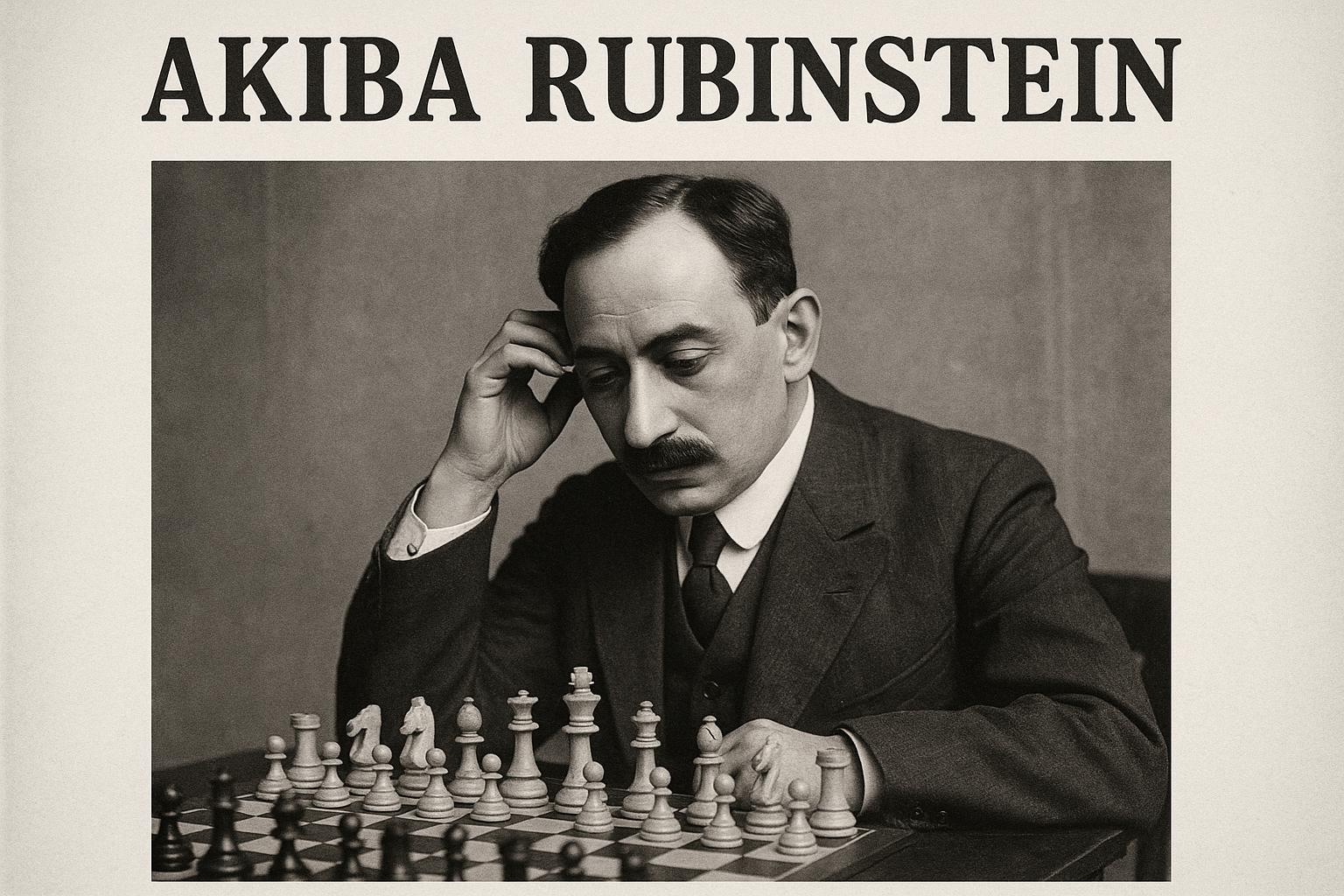
Akiba Rubinstein: A Chess Master of the Early 20th Century
Akiba Rubinstein, born on December 1, 1882, in Stawiski, Poland, was a renowned chess grandmaster whose contributions to the game are still celebrated today. His exceptional talent in chess emerged during an era marked by the dominance of chess legends like Emanuel Lasker and José Raúl Capablanca.
Early Life and Career
Rubinstein was the youngest of 13 children in a Hasidic Jewish family. Originally destined for a career in the rabbinate, he discovered chess around the age of 16. Honing his skills in local Polish chess clubs, he soon garnered attention for his unique playing style, characterized by strategic depth and meticulous planning.
By the early 1900s, Rubinstein had established himself as a formidable presence in European chess tournaments. His first notable victory came in 1907 at the international tournament in Ostend, where he tied for first place with Ossip Bernstein and Georg Salwe. This success marked the beginning of his rise to prominence.
Achievements and Playing Style
Rubinstein’s playing style was marked by his strategic acumen and endgame expertise. His profound understanding of positional play and his ability to transition smoothly into winning endgames were hallmarks of his approach. Many of his games continued to be studied for their instructional value.
One of his most celebrated achievements was at the St. Petersburg tournament in 1909, where he won against competitors like Emanuel Lasker and José Raúl Capablanca. Additionally, the year 1912 is particularly significant in Rubinstein’s career. He won five major tournaments that year, exhibiting his prowess and reinforcing his reputation as a leading chess player of his time.
Challenges in Chess and Legacy
Despite his formidable skills, Rubinstein never competed for the World Chess Championship. A scheduled match with Emanuel Lasker in 1914 was canceled due to the outbreak of World War I. After the war, Rubinstein’s chances diminished, as emerging players began to dominate the chess scene. This unfortunate turn of events meant that he would never get the opportunity to formally lay claim to the title of World Chess Champion, leaving him as one of the greatest players never to have competed for the title.
Nonetheless, Rubinstein’s influence on the game of chess is undeniable. His contributions to chess theory, especially in the area of openings and endgames, have endured for decades. The Rubinstein Variation in the French Defense and various other openings are named in his honor, serving as testaments to the lasting impact of his strategic innovations. These contributions continue to be remembered and studied by chess enthusiasts around the world, ensuring that his ideas remain relevant in modern play.
Personal Life and Later Years
Rubinstein’s life after his peak competitive years was marked by personal challenges. He reportedly suffered from severe psychological issues, possibly stemming from schizophrenia, which affected his public appearances and participation in tournaments. Despite these difficulties, he remained a part of the chess world, occasionally participating in high-level competitions until the early 1930s. His ability to play at such a level despite his personal battles highlights his dedication and passion for the game.
Akiba Rubinstein passed away on March 15, 1961, in Antwerp, Belgium. Despite the absence of a championship title, his legacy as a brilliant strategist and innovator remains significant in the world of chess. His games are cherished by enthusiasts and continue to inspire generations of players. The elegance and depth of his play serve as a benchmark for both aspiring and established players, demonstrating the timeless nature of his contributions to the game.
Teaching and Literature
For those interested in exploring more about Akiba Rubinstein, his games and strategies are extensively available in chess literature and archival databases. Many chess books analyze his famous matches, providing insight into his thoughts and strategies during critical moments of his games. Such resources often delve deep into his tactical brilliance and offer a comprehensive look into his unique approach to chess.
Researchers and chess historians regularly highlight Rubinstein’s role in the development of chess theory. His ideas about the endgame, in particular, have had a profound influence on strategic thinking in the game. The study of endgames, an area where Rubinstein particularly excelled, is an integral component of learning and mastering chess, contributing to the appreciation of his methods and understanding of the game.
Engagement with such materials not only provides a direct look into Rubinstein’s genius but also inspires those who wish to deepen their own chess understanding. By examining his matches, players can gain a better grasp of strategic nuances and how to apply them effectively in their own games.
For more detailed insights into Akiba Rubinstein’s games and instructional content, consider exploring archival chess databases or dedicated chess literature that delves deeper into his contributions and his most famous matches. Through these resources, enthusiasts and scholars can celebrate Rubinstein’s legacy and continue to learn from a master who left an indelible mark on the history of chess.