
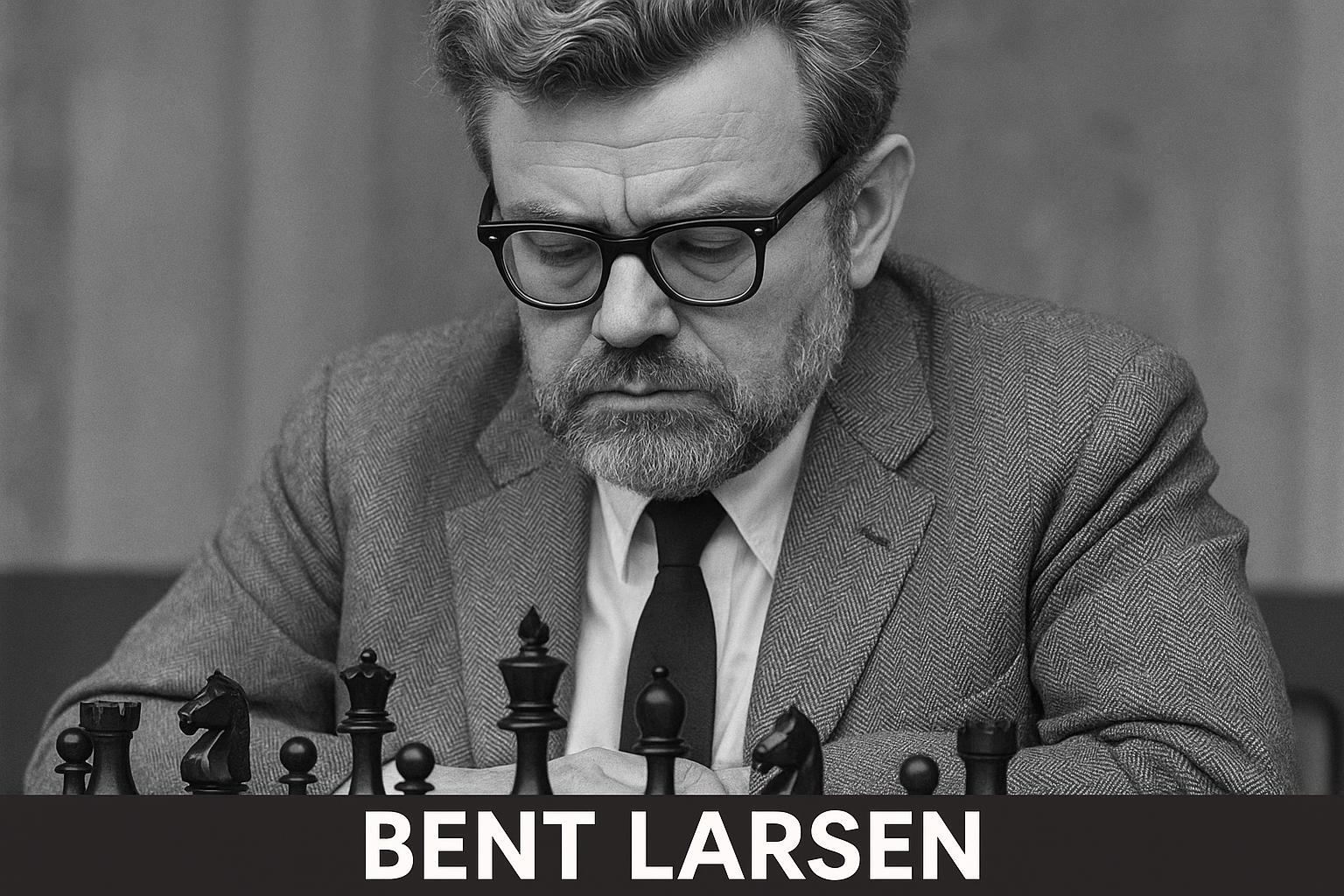
Bent Larsen: A Pioneering Chess Grandmaster
Bent Larsen, an eminent figure in the world of chess, was born on March 4, 1935, in Thisted, Denmark. Throughout his career, Larsen made significant contributions to the game, showcasing his innovative strategies and determination. He was the first player from the Western Hemisphere to challenge Soviet dominance in chess during the mid-20th century.
Early Life and Career
Larsen’s journey into the chess world began in his early childhood. Born into a modest family, Bent demonstrated an early aptitude for strategic games, gravitating towards chess naturally. As he took more interest in the game, his prodigious skills began to unfold. By his teenage years, he was already making a name for himself in Danish chess circles. His unique ability to comprehend complex gameplays at such a young age hinted at his future potential. In 1954, at the tender age of 19, Larsen became the youngest player to win the Danish Chess Championship. This was not a solitary accomplishment as he replicated this feat several times throughout his career, reaffirming his dominance in Danish chess.
Notable Achievements
Over the years, Larsen’s reputation extended beyond national borders, turning him into an international chess ambassador for Denmark. One of the defining moments in his career was earning the esteemed title of Grandmaster in 1956. This recognition came on the back of his remarkable performances in several international tournaments, distinguishing him as a formidable competitor in the world chess arena.
His participation in The Candidates Tournament particularly highlighted his prowess. This tournament is known for assembling the best players globally, and finishing as a semifinalist in both 1965 and 1968 marked Larsen as one of the top players of his era. These results not only bolstered his personal ranking but also cemented his reputation as a true pioneer, challenging the Soviet stronghold on international chess.
Larsen carved a new era being the first Westerner to achieve the top ranking in the International Chess Federation ratings during the Soviet’s golden era in this sport. This was a remarkable feat considering the Soviet’s domination in chess during that period. His rise to such heights was not only a personal triumph for Larsen but also indicative of the shifting dynamics in international chess.
Playing Style
Larsen’s games were a spectacle of innovation and aggression. He was known for his unconventional and aggressive style of play, often choosing openings that defied traditional theories. His preference for the opening move 1.b3 established it as his trademark, and it later became famously known as the “Larsen Opening.” His style was characterized by unexpected moves that would often unsettle his opponents, allowing him to gain tactical advantages. For Larsen, chess was not merely a battle of minds; he viewed it as an art form, one that embodied creativity and surprise, constantly challenging the norms of structured chess strategies.
Legacy
Larsen’s influence on the game was profound and lasting. Despite facing the formidable Soviet chess juggernaut, he sustained his status as a top-tier player into the 1970s. His strategies, often unconventional, continue to be studied by chess enthusiasts and scholars. Beyond his moves on the chessboard, Larsen also made significant contributions through authorship. He penned numerous books and articles on chess, disseminating his insights and strategies to future generations of players and enthusiasts.
The impact of Larsen’s career extends beyond his own time. His pioneering achievements and innovative style introduced a breath of fresh air into chess circles. His games remain subjects of detailed analysis, and his writings serve as valuable resources for those looking to understand the depths of chess strategy.
For more detailed information about Bent Larsen’s incredible journey and contributions to chess, enthusiasts might consider exploring additional resources such as Chess.com and other specialized chess platforms. These sites offer extensive insights into his games, strategies, and lasting influence on the chess world.
Bent Larsen passed away on September 9, 2010, but his legacy endures, immortalized in the annals of chess history. His impact on chess strategy and significant role in altering the global chess landscape remain subjects of extensive study and admiration. As chess continues to evolve, Larsen’s contributions to the game he loved so dearly continue to inspire new generations of players and fans worldwide.